A New Musical
Desert River
One family. Two kinds of courage.
The wire that never moved.

Enter
A New Musical
One family. Two kinds of courage.
The wire that never moved.
Before the questions —
there was a life.
A garden. A storefront. A fishing boat.
Children asleep in a house you built with your hands.
It began on a Thursday.
February 19, 1942.
Executive Order 9066.
Then notices, posted by soldiers,
ordering out one hundred and twenty thousand people —
two-thirds of whom were citizens
of the United States of America.
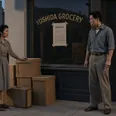
They came. They taped a notice to the glass.
Seven days. Pack what you can carry.
Leave the rest.
Then they put us on trains.
Shades pulled down.
Tags on our coats.
Numbers where our names used to be.
They sent us to places that sound,
from a distance, almost beautiful.
Manzanar
·
Tule Lake
·
Heart Mountain
·
Topaz
·
Minidoka
Gila River
·
Jerome
·
Poston
·
Amache
·
Rohwer
Tar-paper barracks. Desert dust.
Guard towers turning in the night.
They called it relocation.
We called it what it was.
I was there.
I will not tell you which one.
But I will tell you what came next.
They handed us a piece of paper.
Two questions at the bottom —
like two doors in a burning house.
Pick your poison.
There was no clean answer.
There were only boxes —
tiny prisons inside the larger one.
I was Issei. First generation.
The law would not let me become a citizen.
A “yes” meant I became stateless — belonging to no country.
A “no” meant I was disloyal. Dangerous. Marked.
Write it wrong, lose your family.
Write it right, lose yourself.
And if you answered “no” —
they sent you to Tule Lake.
Double fencing. Military police. Tanks at the gate.
Nearly nineteen thousand souls
in the camp the government kept for the “disloyal.”
Some of them were the most loyal people
I have ever known.
And that is what the questions were really designed to do.
Not just to cage us behind wire —
but to make us cage each other.
“Yes-yes” families stopped speaking to “no-no” families.
Neighbors became enemies.
Mothers wouldn’t look at each other across the mess hall.
We were told we had to choose
between two kinds of losing.
And we chose differently —
because we were each trying
to keep someone alive.
We were tearing down each other
while the wire never bent.
And yet —
My son answered yes.
He put on a uniform from inside a camp.
He fought in Italy and France.
The 442nd Regimental Combat Team.
Go for Broke.
The most decorated unit in the history of the United States military,
for its size and length of service.
“Rarely has a nation been so well served by a people it had so ill-treated... They did more than defend America; in the face of painful prejudice, they helped to define America at its best.”— President Bill Clinton
He earned his medals while I was still behind wire.
Think about that.
Most of the camps closed in 1945.
The last, in 1946.
They handed us twenty-five dollars and a one-way ticket.
Go home, they said — or go wherever you want.
As if home was still there.
The stores were sold. The farms were gone.
The names above the doors — erased.
And then, for a long time — nothing.
Forty-three years.
In 1988, a president signed a paper.
It said: this was wrong.
Twenty thousand dollars.
That is what they decided a stolen life was worth.
Paid to those who survived long enough to receive it.
Many did not survive to receive it.
I did.
I held the check.
I thought of everyone who should have been
standing beside me —
and wasn’t.
This is not a story.
This is a memory.
And memories do not begin.
They surface.
Remember the notice on the door.
Remember the train with the shades pulled down.
Remember the boxes they were forced to fill —
and that the cruelest part
was how those boxes turned neighbor against neighbor,
family against family,
while the wire never moved.
Remember that some of them
went for broke anyway.
Remember —
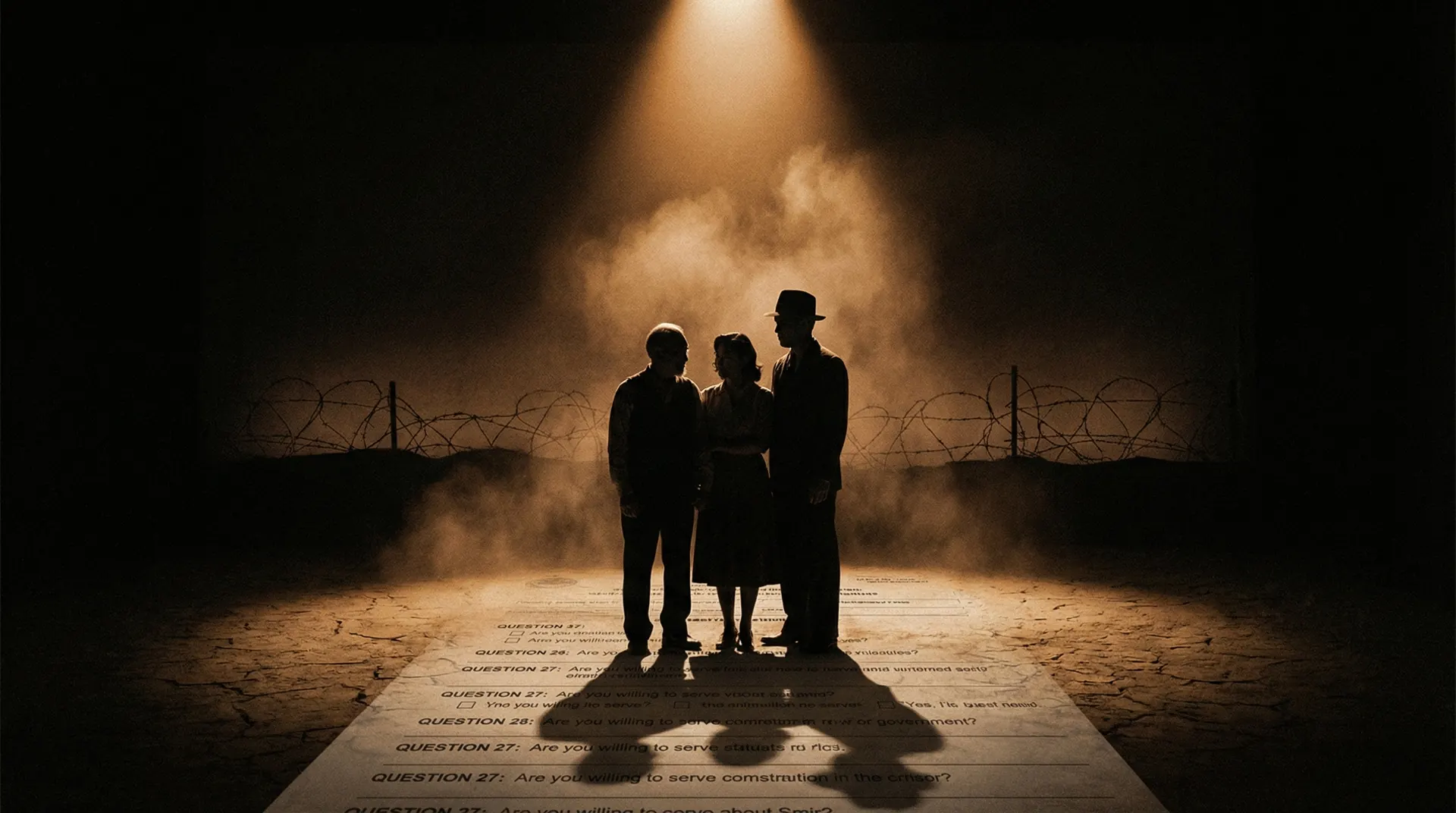
Desert River is a sung-through 1940s jazz musical set inside a Japanese American incarceration camp during World War II. The camp itself is fictional, drawn from the ten real ones and named for a river that never runs. One family. Two kinds of courage. The wire that never moved.
A score of small-band 1940s jazz, composed for the people America uprooted, in the sound of the America they still claimed.
The wire is always present, even before the gates close. The orchestra never pretends the wire isn’t there.
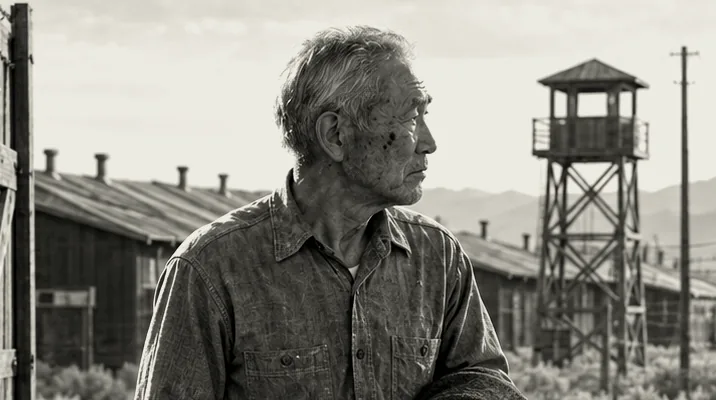
The Elder
Issei narrator. First generation. Arrived before the war, never granted citizenship by law. Neither bitter nor forgiving — simply a witness who survived long enough to be believed.
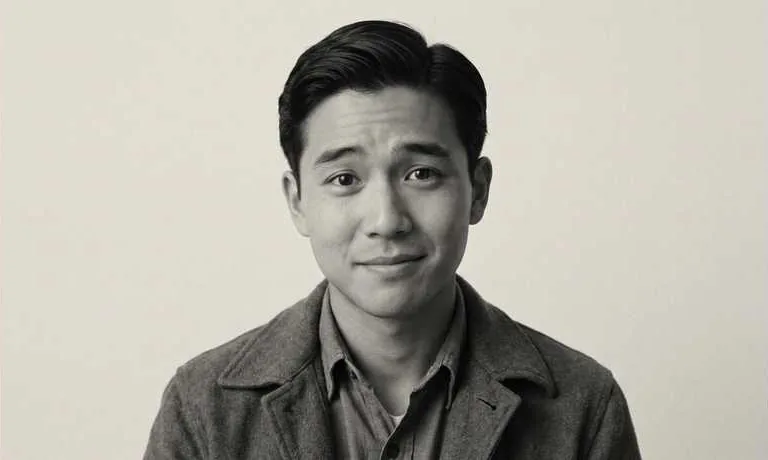
The Husband, David
Cynic baritone. Sees every sign-up sheet as a coat of paint over a cage. Sharp, syncopated, and driven by a defiance he can’t put down.
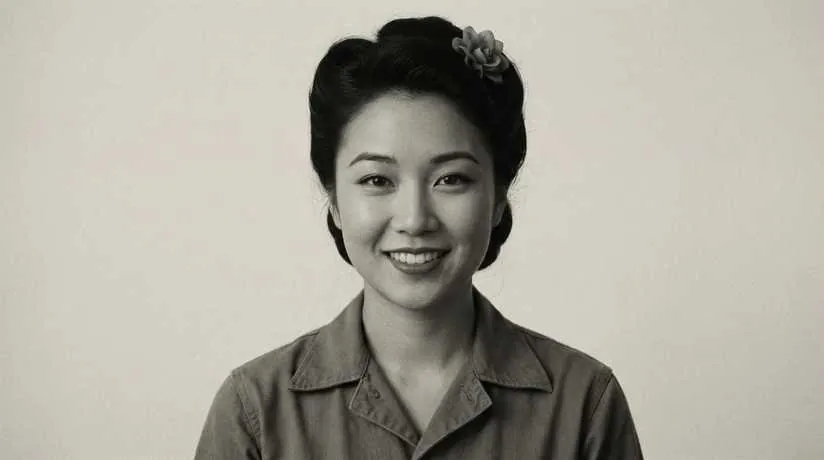
The Wife, Emi
Organizer mezzo. Counts spoons at dawn and calls that resistance too. Warm, precise, and carrying more than anyone knows.
New to the story? Start with the Overview & Prologue: the history in brief, the family at the heart of the show, and the Prologue in full. Each act then has its own narrated presentation that walks through the history behind it, where each song sits in the plot, and what it’s doing dramatically, with excerpts from the songs. Watch one as a lead-in, then listen to the full act below.
Each song in Desert River is grounded in documented history. Select a song’s Dramaturg button to view its primary sources, archival photographs, and historical context.
Desert River is a work of creative interpretation. Historical facts are drawn from public records and primary sources. Any errors of historical context are unintentional and will be corrected. Photographs are from the U.S. War Relocation Authority / Library of Congress FSA-OWI collection and are in the public domain (no known copyright restrictions). The Bonus Track photograph is from the U.S. Army Signal Corps, courtesy of the National Archives via Densho, and is free of known copyright restrictions. Joji Nakamura is a fictional character.
The following photographs are public domain documents from the United States National Archives and the Library of Congress, taken by War Relocation Authority photographers Clem Albers, Francis Stewart, Dorothea Lange, and the U.S. Army Signal Corps between 1942 and 1943. They show what the evacuation and incarceration of Japanese Americans actually looked like — the orders, the escorts, the displacement, and the daily indignities of confinement.

San Francisco, California. Saturday afternoon shoppers reading order directing evacuation of persons of Japanese ancestry. This store on Grant Avenue in Chinatown was vacated by an art dealer of Japanese descent. Evacuees will be housed in War Relocation Authority centers for the duration.
No known copyright restrictions · Densho Digital Repository
The evacuation of Japanese-Americans from West Coast areas under U.S. Army war emergency order. Japanese try to sell their belongings.
No known copyright restrictions · Library of Congress
Oakland, Calif., Mar. 1942. A large sign reading “I am an American” placed in the window of a store, at [401–403 Eighth] and Franklin streets, on December 8, the day after Pearl Harbor. The store was closed following orders to persons of Japanese descent to evacuate from certain West Coast areas. The owner, a University of California graduate, will be housed with hundreds of evacuees in War Relocation Authority centers for the duration of the war.
No known restrictions on publication · Library of Congress
Photograph shows Japanese Americans walking through military police prior to being involuntarily relocated to a concentration camp during World War II.
No known restrictions on publication · Library of Congress
Other evacuees were transported from their residence areas to assembly centers by train. Photo shows a group of evacuees assembled at a Los Angeles railroad station waiting to board train for Santa Anita Assembly Center.
No known copyright restrictions · Library of Congress
Photograph shows unidentified Japanese Americans standing in line to enter dining hall next to barracks at the concentration camp where they were incarcerated during World War II.
No known copyright restrictions · Library of Congress1918 – 2007 · 88 Years
In 1918, Katsuichi “George” Tsuda and his wife Tomo opened a small grocery store in Old Town Auburn, California. For nearly a quarter century it became a place where neighbors gathered, friendships were kept, and a family put down roots.
When Executive Order 9066 was signed in 1942, the Tsuda family — along with thousands of other Japanese American families across the West Coast — was forcibly removed from their homes and businesses. Tsuda’s Grocery closed, and the family was scattered across three locations. Katsuichi, identified as a community leader, was held in the local jail before being sent to a camp near Bismarck, North Dakota — an experience he never spoke about. His wife, their daughter, and son Frank were sent to Tule Lake. Mae and Johnny were away at school in Japan when Pearl Harbor was bombed and could not return home; Johnny, serving in the Japanese navy, was lost at sea. The family endured this separation and grief without ever being together again as they once were.
After the war, the Tsudas came back. They purchased a new building from the Auburn Buddhist Church in 1951, reopened the store, and kept it going for another five decades — through Frank Tsuda, who ran it until his death in 2006 at age 93, and through Dorothy Fujii and Mae Ebara, his sisters, who kept the doors open until the store finally closed in 2007.
“During the war, we were relocated and interned at Tule Lake. A lot of Japanese families lived in ranches up here, but after the war, they didn’t come back. When our family moved back here, we purchased this property from the Auburn Buddhist Church in 1951.”— Dorothy Fujii
The opening song, Notice on the Door, is dedicated to the Tsuda family — to Katsuichi, held in silence at Bismarck; to Johnny, lost at sea; and to every family who endured this injustice, were separated by war, and carried its consequences long after the fighting had ended.
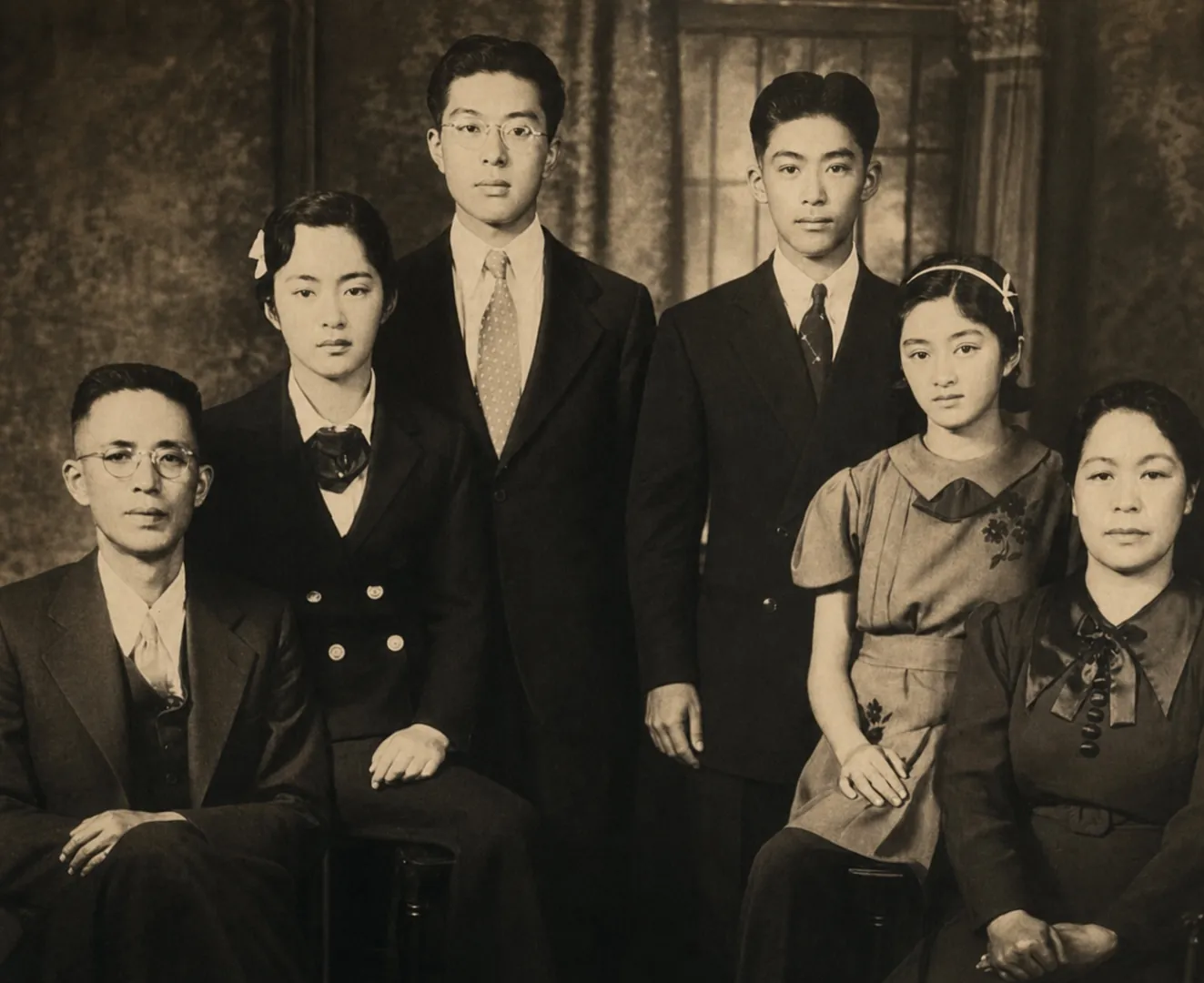
Tsuda Family, approximately 1930, left to right Katsuichi, Mae, Frank, Johnny, Dorothy, Tomo. Photo courtesy of the Fujii family.
Preserving the history of the Heart Mountain Relocation Center and the Japanese American experience during World War II.
Preserving the testimonies of Japanese Americans who were unjustly incarcerated during World War II through oral histories, photographs, documents, and newspapers.
The Nichi Bei Foundation’s Films of Remembrance is an annual showcase of documentary films shedding light on the forced removal and incarceration of Japanese Americans during World War II. Special recognition is given to Conscience and the Constitution (2000, dir. Frank Abe) — a landmark one-hour PBS documentary that tells the long-suppressed story of the 85 young men at Heart Mountain who refused military induction until their rights as citizens were restored. Set at the very camp that inspired this musical’s prologue, it is essential viewing.
Honoring the Japanese American veterans of World War II — including the 442nd Regimental Combat Team and the 100th Infantry Battalion — ensuring their legacy of courage and sacrifice is passed to future generations.
Desert River is presented in honor of the Japanese American communities whose history, resilience, and voices continue to shape this work. The project seeks to help preserve the legacy of Japanese American incarceration and ensure that these stories are remembered, shared, and never forgotten. This story was built on the work of those who have safeguarded that history, and it belongs to the community whose experience inspires it.
We welcome your feedback, reactions, and reflections on Desert River. Your message goes directly to the creative team.
Desert River — Official Trailer · 2:56
Desert River — Prologue: Before the Questions · 5:30